How to Choose the Right Caster Wheel for Heavy Industrial Loads
We get a version of the same call every week: someone bought caster wheels that "looked right" on a spec sheet, and three months later they're cracked, seized, or wobbling under load. It's the most common mistake we see in 30 years of manufacturing — buying a wheel that matches the weight on paper, without accounting for how it's actually going to be used on the floor.
At Danso Castors, this is the same question we walk clients through before recommending anything from our range — whether it's a Forzing Fix Castor for heavy machinery or a swivel castor for a warehouse trolley. Here's what actually matters when you're choosing a wheel that needs to survive daily industrial use, not just a demo run.
What We Check Before Recommending a Wheel
Every order starts with a few honest questions — not a catalog page. This is what we ask clients before pointing them toward a product:
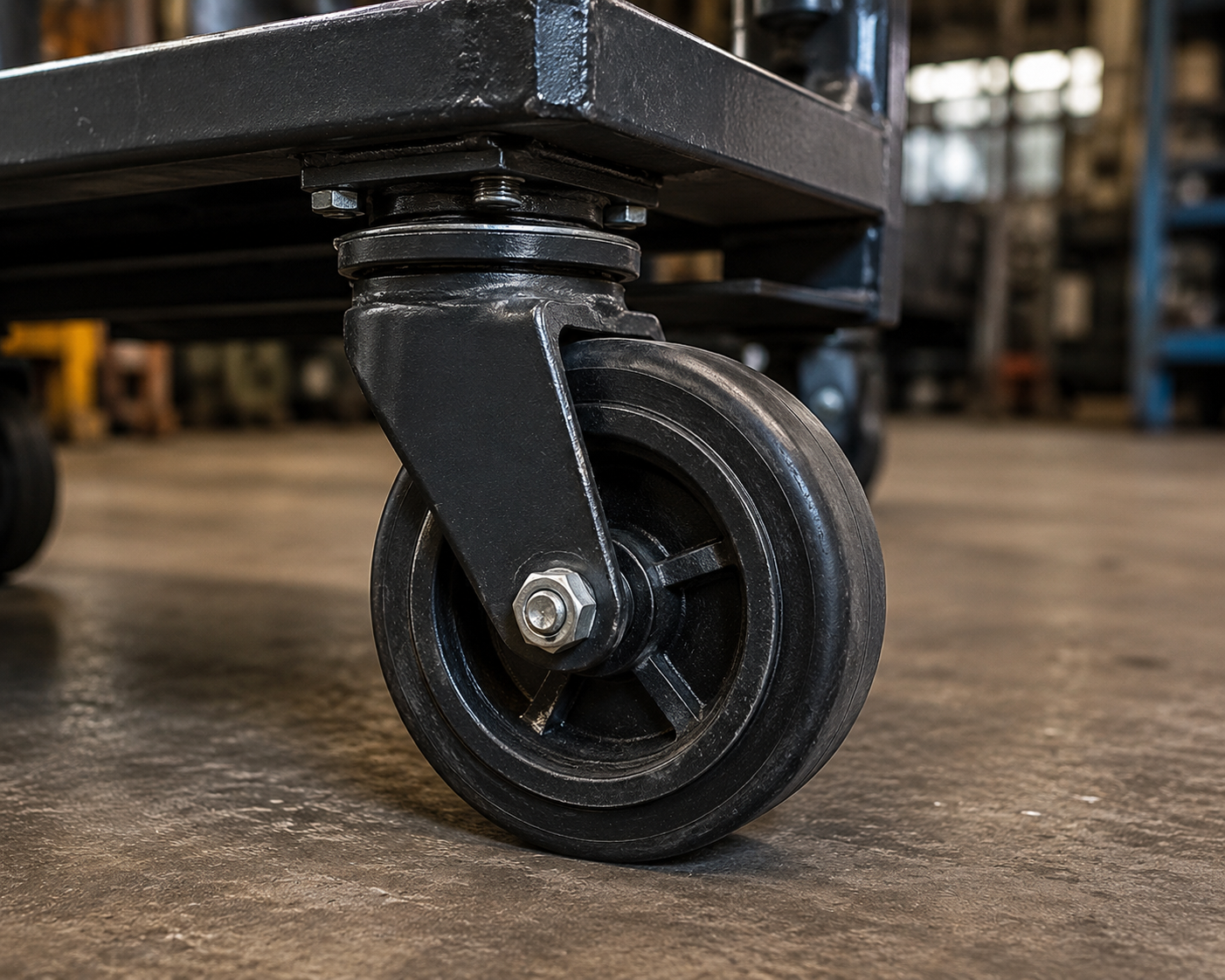
Load capacity trips up more buyers than anything else. A wheel rated for 500 kg while sitting still can behave very differently once it's rolling — starting, stopping, and taking impact from uneven flooring adds real stress that a static rating doesn't account for. Our rule of thumb, after three decades of seeing wheels fail and figuring out why: pick a wheel rated comfortably above your actual working load, not right at the edge of it.
Material matters just as much as load rating, and it's where we spend most of our time with new clients. Our nylon wheels — like our Heavy Duty Nylon Caster Wheel line — hold up well under heavy industrial loads but can be tougher on polished or delicate flooring. PU wheels strike a balance between load capacity and smoother, quieter movement, which is why they're popular for warehouse and retail settings. Rubber wheels are the better call where floor protection and shock absorption matter more than sheer weight capacity, like hospital corridors or showroom floors.
If you're not sure which of these fits your setup, that's exactly the kind of question we're used to answering before an order goes out — not after something's already failed on your floor.